Lorenzo
The DecameronLorenzo is a young Pisan employee whose secret love for Lisabetta, the unmarried sister of his three wealthy employers, ends in murder and becomes the source of her enduring grief. In Filomena’s tale, he is introduced as comely and agreeable, a capable manager of the brothers’ affairs, and a man whose mutual attraction with Lisabetta develops into a clandestine relationship. His killing turns him from an active lover into an absent presence: first disclosed in a dream, then hidden in the basil pot that Lisabetta tends until her death.
Identity and Introduction
Lorenzo is from Pisa and works in a warehouse belonging to three brothers, merchants settled in Messina. Their father, a wealthy man from San Gimignano, has left them rich; they have one sister, Lisabetta, whom they have not yet married. Lorenzo’s position places him within the household’s commercial life, entrusted with carrying out and managing the brothers’ business. The story identifies him as striking in appearance and agreeable in manner, qualities that accompany his practical responsibility without explaining or diminishing it.
His introduction establishes an intimate connection between work and desire. Lisabetta sees him repeatedly, and he notices her attention. He, too, becomes drawn to her, leaving his other loves to turn his thoughts toward her. The narrative presents their attraction as reciprocal: neither is merely pursuing an unwilling object, and each comes to trust the other enough for their relationship to become physical. Their affair is secret, but its secrecy does not hold.
Love and Secrecy
The account gives little outward detail about the lovers’ meetings; instead, it marks the relationship through its gradual, mutual beginning and its discovery. Lorenzo and Lisabetta find pleasure in one another, but they fail to keep the affair entirely hidden. One night, when Lisabetta goes to where Lorenzo lies, her eldest brother sees her. He does not confront them at once. Though the discovery troubles him, he waits until morning and tells his brothers what he has witnessed.
The brothers deliberate together. They decide to say nothing to Lisabetta or Lorenzo for the time being, while considering how to remove what they regard as a source of shame without bringing reproach upon themselves or their sister. The delay makes the lovers’ danger invisible to them: the brothers continue to laugh and converse with Lorenzo as they ordinarily do. Their familiar manner conceals a decision already taking shape, turning the household’s ordinary trust into a cover for violence.
Murder and Revelation
One day the brothers pretend that they are going outside the city for pleasure and take Lorenzo with them. At a lonely, remote place, when he is off his guard, they kill him and bury his body so that no one will know what happened. Back in Messina, they say that they have sent him away on business. Their explanation is plausible because Lorenzo has often traveled for their affairs.
His absence leaves Lisabetta without an answer. She repeatedly asks her brothers about him, distressed by the length of his delay. One brother rebukes her for asking so often and threatens that she will receive an answer she deserves if she continues. She stops questioning them, sad and frightened without knowing the reason for her fear. At night she calls for Lorenzo and weeps over his long absence. Her grief continues without a moment of happiness until he appears to her in a dream.
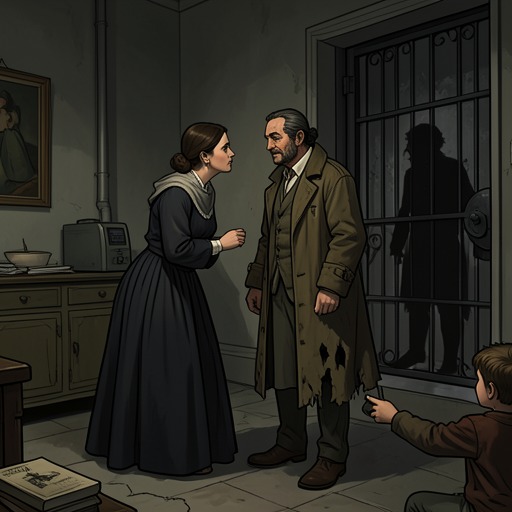
In the dream, Lorenzo looks pale and disordered, his clothes torn and decayed. He tells Lisabetta that he cannot return because her brothers killed him on the last day she saw him. He also reveals where they buried him, then tells her to stop calling for him or expecting his return. The vision gives her the knowledge that her brothers have withheld, and identifies Lorenzo’s disappearance not as a business journey but as a murder.
The Basil Pot
The next morning Lisabetta dares not question her brothers. Instead, with leave to go outside the city for recreation, she goes to the place Lorenzo named, accompanied by a woman who has been with the household before and knows her circumstances. Lisabetta clears away the dead leaves and digs where the ground seems less hard. She finds Lorenzo’s body, which has not yet decayed, and recognizes the dream’s account as true. Unable to carry the whole body away to give it proper burial, she cuts off his head, wraps it in a cloth, and has it carried home in her maid’s lap.
In her chamber, Lisabetta weeps over the head and kisses it repeatedly. She places it, wrapped in fine linen, inside a large flowerpot, covers it with earth, and plants basil from Salerno above it. She waters the plant with her tears and with rose or orange-flower water. The pot conceals the remains, but it also keeps Lorenzo physically present in the space of her daily mourning: Lisabetta sits beside it, gazes at it, and bends over it to weep. The basil grows beautiful and fragrant through her constant care and the richness of the earth in which the head lies.
Aftermath and Narrative Role
Lisabetta’s neighbors notice her repeated vigil and tell her brothers that she is wasting away and weeping. The brothers reproach her, but she does not stop. They secretly take the pot from her; when she cannot recover it, she laments until she falls ill. Her brothers investigate the object she continues to demand, empty its earth, and find the cloth and Lorenzo’s head. His curled hair enables them to recognize him. They bury the head and leave Messina secretly for Naples, fearful that the truth will become known.
Lorenzo does not return to life, and the brothers’ departure does not restore Lisabetta. She dies still mourning and asking for her basil pot. In time, the story becomes public, and a song is made about the stolen pot. The ending thus carries Lorenzo’s story beyond the private household: his concealed murder becomes known through Lisabetta’s grief and the object the brothers tried to remove. He is not given a voice except in the dream that reveals the truth, but that revelation changes the meaning of his absence and makes his buried body the center of the tale’s lasting memory.